Want to grow your business? Then you need leads—and not just any leads, but high-quality ones that convert. In this comprehensive guide, we’ll break down everything you need to know about generating, nurturing, and converting leads into loyal customers.

What Are Leads and Why They Matter

At the heart of every successful business lies a steady stream of leads. But what exactly are leads? In simple terms, a lead is any individual or organization that has shown interest in your product or service. This interest could come from filling out a form, subscribing to a newsletter, downloading a resource, or engaging with your content online.
Defining a Lead in Modern Marketing
In today’s digital-first world, a lead is more than just a name and email. It’s a potential relationship waiting to be nurtured. According to HubSpot, a lead is “a person who could become a customer” based on their interaction with your brand HubSpot.
- A lead indicates intent to learn more about your offering.
- They may not be ready to buy yet, but they’ve taken a step toward your brand.
- Leads can come from various channels: social media, search engines, referrals, or events.
Types of Leads: MQLs vs SQLs
Not all leads are created equal. Businesses categorize them based on readiness to buy:
- Marketing Qualified Leads (MQLs): These are leads who’ve engaged with your marketing efforts—like downloading an eBook or attending a webinar—but aren’t sales-ready yet.
- Sales Qualified Leads (SQLs): These leads have been vetted by the sales team and show clear buying intent, such as requesting a demo or pricing information.
“A lead is not a sale, but every sale starts with a lead.” – Unknown
Why Generating Leads Is Critical for Business Growth
Without leads, there’s no pipeline. No pipeline means no sales, and no sales mean no growth. Lead generation is the lifeblood of sustainable business expansion, especially in competitive markets.
Leads Fuel the Sales Funnel
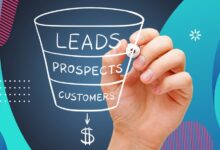
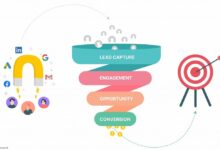
The sales funnel represents the customer journey—from awareness to purchase. Leads populate each stage of this funnel. Top-of-funnel (TOFU) leads are just discovering your brand, while bottom-of-funnel (BOFU) leads are ready to make a decision.
- TOFU: Attract leads with educational content (blogs, videos).
- MOFU: Nurture leads with case studies, webinars, and comparison guides.
- BOFU: Convert leads with free trials, demos, and consultations.
Leads Drive Revenue and Scalability
Every new lead is a potential revenue source. According to Salesforce, companies that excel at lead generation grow 2.3x faster than their peers Salesforce State of Sales Report. Consistent lead flow allows businesses to scale operations, invest in innovation, and expand into new markets.
- High lead volume enables predictable revenue forecasting.
- Qualified leads reduce customer acquisition costs (CAC).
- Recurring leads support subscription-based and SaaS business models.
7 Proven Strategies to Generate High-Quality Leads
Generating leads isn’t about casting a wide net—it’s about fishing in the right pond with the right bait. Here are seven powerful, data-backed strategies to attract and capture high-converting leads.
Create High-Value Lead Magnets
A lead magnet is a free resource offered in exchange for contact information. The key is relevance and value. Examples include:
- E-books and whitepapers
- Checklists and templates
- Free tools or calculators
- Webinars and mini-courses
For instance, a SaaS company might offer a free ROI calculator, while a fitness brand could provide a 7-day meal plan. The more specific and useful the lead magnet, the higher the conversion rate.
Optimize Landing Pages for Conversion
Your landing page is where leads are captured. A poorly designed page can kill even the best traffic. Best practices include:
- Clear, benefit-driven headlines
- Minimal form fields (name and email often suffice)
- Strong call-to-action (CTA) buttons in contrasting colors
- Trust signals like testimonials or security badges
According to Unbounce, high-converting landing pages can achieve conversion rates of 20% or more Unbounce CRO Statistics. A/B testing different layouts and copy can dramatically improve performance.
Leverage SEO to Attract Organic Leads
Search engine optimization (SEO) is one of the most cost-effective ways to generate long-term leads. When people search for solutions you offer, you want your content to appear at the top.
- Target long-tail keywords like ‘best CRM for small business leads’.
- Create comprehensive, pillar content that answers user intent.
- Optimize meta descriptions, headers, and image alt text.
- Build backlinks from authoritative sites to boost domain authority.
Backlinko’s research shows that the #1 result on Google gets 27.6% of all clicks—making SEO a lead-generation powerhouse Backlinko CTR Study.
Run Targeted Paid Advertising Campaigns
While SEO takes time, paid ads deliver immediate leads. Platforms like Google Ads and Facebook Ads allow precise targeting based on demographics, interests, and behavior.
- Use Google Search Ads to capture high-intent keywords like ‘buy email marketing software’.
- Deploy Facebook Lead Ads with pre-filled forms for frictionless sign-ups.
- Retarget website visitors with display ads to re-engage cold leads.
LinkedIn Ads are especially effective for B2B lead generation, allowing targeting by job title, industry, and company size LinkedIn Ads Guide.
Host Webinars and Live Events
Webinars are one of the most effective lead generation tools, combining education with engagement. Attendees must register with their contact details, instantly creating a pool of warm leads.
- Choose topics that solve real pain points (e.g., ‘How to Double Your Leads in 90 Days’).
- Promote via email, social media, and partner channels.
- Follow up with a personalized email sequence and offer a recording as a secondary lead magnet.
GoToWebinar reports that 20–40% of registrants typically attend live, and 60–80% convert into qualified leads GoToWebinar Stats.
Build an Email List with Strategic Opt-Ins
Email remains one of the highest ROI channels for lead nurturing. The average ROI for email marketing is $42 for every $1 spent Campaign Monitor.
- Use pop-ups, slide-ins, and inline forms on high-traffic pages.
- Offer lead magnets at content conclusion (content upgrades).
- Segment your list based on behavior and interests for personalized follow-ups.
Tools like Mailchimp, ConvertKit, and ActiveCampaign make it easy to automate lead nurturing sequences.
Partner with Influencers and Affiliates
Influencer marketing can rapidly expand your reach and credibility. When a trusted figure recommends your product, their audience is more likely to become leads.
- Collaborate with micro-influencers in your niche for higher engagement.
- Launch an affiliate program offering commissions for referred leads.
- Co-create content like YouTube videos, live streams, or Instagram takeovers.
A study by Influencer Marketing Hub found that businesses earn $5.20 for every $1 spent on influencer marketing Influencer Marketing ROI.
How to Qualify and Score Leads Effectively
Not all leads are worth pursuing. Wasting time on unqualified leads drains resources. That’s why lead qualification and scoring are essential.
Implement BANT Framework for Lead Qualification
BANT is a classic sales methodology that evaluates leads based on four criteria:
- Budget: Does the lead have the financial means to purchase?
- Authority: Is the lead the decision-maker or influencer?
- Need: Do they have a genuine problem your product solves?
- Timeline: Are they planning to buy soon?
Sales teams use BANT to prioritize leads and focus on those most likely to convert.
Use Lead Scoring to Rank Lead Quality
Lead scoring assigns numerical values to leads based on their behavior and profile. For example:
- +10 points for visiting the pricing page
- +20 points for downloading a product brochure
- +30 points for attending a demo
- -5 points for inactive email engagement
Marketing automation platforms like HubSpot and Marketo allow businesses to set up dynamic lead scoring models that sync with CRM systems.
“Lead scoring helps separate the tire-kickers from the true buyers.” – MarketingProfs
Nurturing Leads Through the Buyer’s Journey
Only 2% of leads convert on first contact. The rest need nurturing. Lead nurturing is the process of building relationships over time through relevant, timely communication.
Map Content to the Buyer’s Journey
Different stages of the buyer’s journey require different content:
- Awareness Stage: Blog posts, infographics, social media content.
- Consideration Stage: Case studies, comparison guides, webinars.
- Decision Stage: Free trials, demos, testimonials, pricing pages.
Aligning content with each stage ensures leads receive the right message at the right time.
Automate Email Drip Campaigns
Email automation allows you to send personalized messages based on user behavior. For example:
- Send a welcome email after sign-up.
- Follow up with a case study three days later.
- Offer a discount or consultation after a week.
Automation tools can trigger emails based on actions like page visits, form submissions, or link clicks.
Engage via Social Media and Retargeting
Social media isn’t just for acquisition—it’s a powerful nurturing channel. Engage leads by:
- Responding to comments and DMs promptly.
- Sharing user-generated content and testimonials.
- Running retargeting ads to remind leads of your offer.
Facebook Pixel and Google Ads Remarketing help track user behavior and serve personalized ads across the web.
Tools and Technologies to Manage Leads Efficiently
Manual lead management is inefficient and error-prone. Modern businesses rely on technology to capture, track, and convert leads at scale.
Customer Relationship Management (CRM) Systems
A CRM is the central hub for all lead data. It stores contact information, tracks interactions, and helps sales teams manage follow-ups.
- HubSpot CRM: Free, user-friendly, integrates with marketing tools.
- Salesforce: Enterprise-grade, highly customizable.
- Zoho CRM: Affordable, great for small to mid-sized businesses.
CRMs provide visibility into the sales pipeline and help forecast revenue accurately.
Marketing Automation Platforms
These tools automate repetitive tasks like email campaigns, lead scoring, and social media posting.
- Marketo: Ideal for large enterprises with complex workflows.
- ActiveCampaign: Combines email marketing with CRM and automation.
- Klaviyo: Popular with e-commerce brands for behavioral targeting.
Automation ensures consistent communication without manual effort.
Lead Capture and Form Tools
Tools like Typeform, JotForm, and Leadpages make it easy to create high-converting forms and landing pages.
- Embed forms on websites, blogs, and social media.
- Use conditional logic to show relevant fields based on user input.
- Integrate with CRMs and email marketing platforms for seamless data flow.
“Technology doesn’t replace good salespeople—it empowers them.” – Unknown
Measuring Lead Generation Success: Key Metrics to Track
What gets measured gets improved. To optimize your lead generation efforts, track these key performance indicators (KPIs).
Conversion Rate
This measures the percentage of visitors who become leads. For example, if 1,000 people visit your landing page and 100 sign up, your conversion rate is 10%.
- Benchmark: Average conversion rate across industries is 9.6% (WordStream).
- Improve by testing headlines, CTAs, and form length.
Cost Per Lead (CPL)
CPL tells you how much you’re spending to acquire each lead. Formula: Total Campaign Spend ÷ Number of Leads.
- Lower CPL means better efficiency.
- Compare CPL across channels to allocate budget wisely.
Lead-to-Customer Conversion Rate
This shows how many leads actually become paying customers. A high lead volume means nothing if few convert.
- Industry average: 5–15% (depending on sector).
- Improve by refining qualification and nurturing processes.
Return on Ad Spend (ROAS)
For paid campaigns, ROAS measures revenue generated per dollar spent. A ROAS of 4:1 means $4 in revenue for every $1 spent.
- Target ROAS varies by business model and profit margins.
- Use UTM parameters to track campaign performance accurately.
“What gets measured gets managed.” – Peter Drucker
What are leads in marketing?
Leads in marketing refer to individuals or organizations that have shown interest in your product or service by providing their contact information or engaging with your brand. They are potential customers at various stages of the buyer’s journey.
How can I generate more leads for my business?
You can generate more leads by creating valuable lead magnets, optimizing landing pages, leveraging SEO, running targeted ads, hosting webinars, building an email list, and partnering with influencers. Consistency and testing are key.
What’s the difference between MQL and SQL?
A Marketing Qualified Lead (MQL) has engaged with marketing content but isn’t sales-ready. A Sales Qualified Lead (SQL) has been vetted by the sales team and shows clear intent to purchase.
How do I qualify leads effectively?
Use frameworks like BANT (Budget, Authority, Need, Timeline) and implement lead scoring based on behavior and demographic data to prioritize the most promising leads.
What tools help manage leads?
CRM systems (HubSpot, Salesforce), marketing automation platforms (Marketo, ActiveCampaign), and lead capture tools (Typeform, Leadpages) are essential for managing leads efficiently.
Generating and converting leads is not a one-time task—it’s an ongoing process that fuels business growth. From understanding what leads are to deploying powerful strategies like SEO, paid ads, and email nurturing, every step matters. By using the right tools, measuring performance, and continuously optimizing, you can build a predictable pipeline of high-quality leads. Remember, the goal isn’t just to get more leads, but to get better ones. Focus on value, relevance, and relationships, and the results will follow.
Further Reading:
